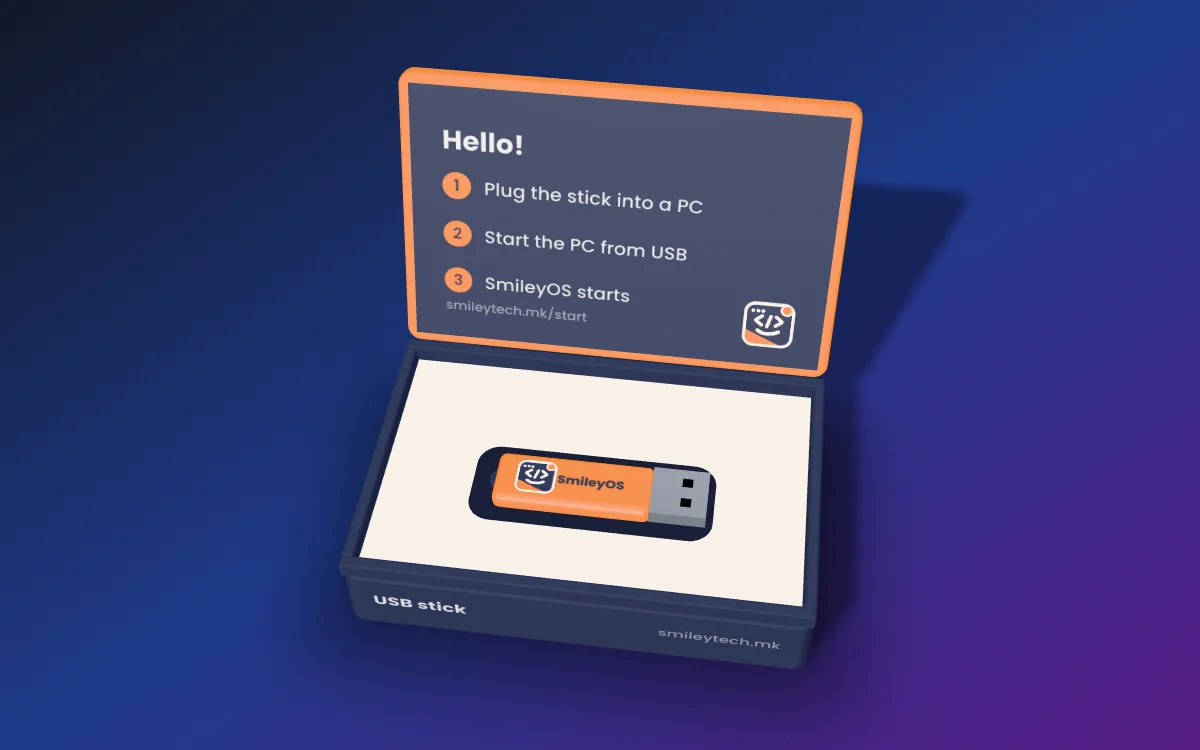
 USB stickSmileyOS for PC
In the making
- want it
- 3
- avg. price2 answers
- €15
SmileyOS, our operating system, is made for kids and simple enough for anyone, and so small that a €20 used PC or a Raspberry Pi runs it from a USB stick or a microSD card.
No ads and no tracking. Made in Skopje, Macedonia.
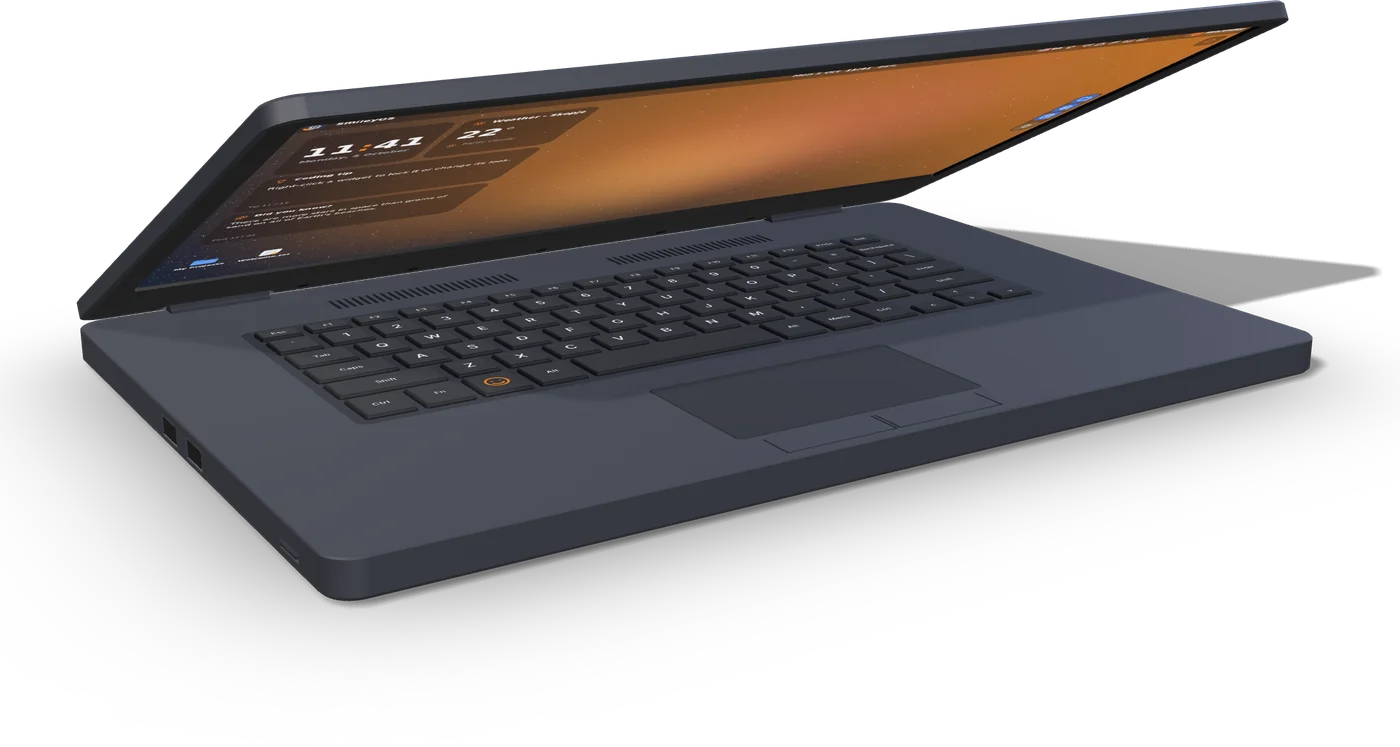
Desktop. A friendly desktop with a launcher, search and widgets.
Live 3D. Drag to turn the laptop.
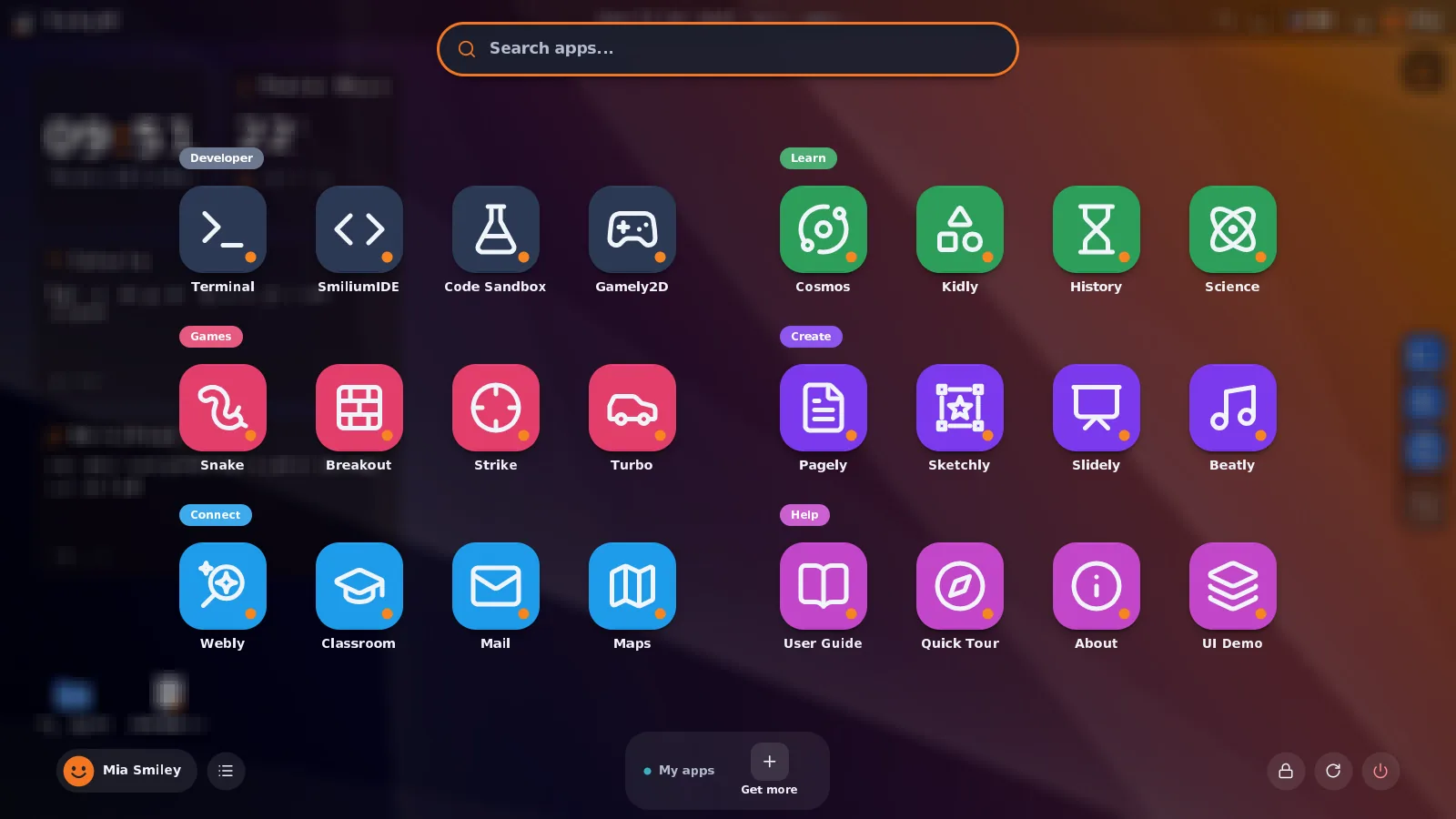
 SmileyOSAbout 20 MB256 MB of memory20 apps and gamesStarts from a USB stick
Every new Windows and macOS needs more memory, more space and a newer, more expensive computer. Linux is free, but Ubuntu 26.04 now asks for more memory than Windows 11. SmileyOS goes the other way: small, simple and quick, with cheap computers built around it.
Bigger and pricier with every version →
We go the other way
Price of the computer it needs →
Updates with a way backNewest
A new version is written next to the one that runs, never over it. The computer tries it once; if it does not start, the previous version starts by itself. The factory version is always kept.
Others: Windows, macOS and most Linux systems change the system in place, so a bad update is hard to undo.
20 MB, not 64 GB
The whole system, with its 20 built-in apps and games, is about 20 MB. More come from our own App Store.
Others: Windows 11 asks for 64 GB of space, Ubuntu Linux for 25 GB.
256 MB of memory, not 4 to 8 GB
SmileyOS runs with 256 MB of memory, so old computers are enough.
Others: Windows 11 needs 4 GB, Ubuntu 26.04 needs 6 GB, and the cheapest Mac has 8 GB. Memory is what makes computers expensive now.
€20, not €800
A used PC or a Raspberry Pi runs SmileyOS, and our own computers are built around it, from about €50 to €250.
Others: The cheapest Mac costs €799. Windows 11 needs a TPM 2.0 chip and a newer processor, so most older PCs cannot run it.
When Windows stops supporting a computer, it ends up in a drawer or in the bin, even if it still works. SmileyOS starts from a USB stick on computers that are 10 or 20 years old. A €20 used laptop becomes a kid’s first computer instead of e-waste.
Every computer that keeps working is one less in the landfill. That is the point of SmileyOS, and of our own computers: cheap, small and built to last.
Sources: Global E-waste Monitor 2024, Canalys.
The same computer grows with a child. Click a step to see it on SmileyOS.
The whole system is on a USB stick. Plug it in, switch the computer on, and SmileyOS starts. Nothing is installed, so the computer keeps its own system.
Or a Raspberry Pi 3 Model B, with SmileyOS on a microSD card.
Take the stick out, and the computer starts its own system again.
Do you make videos or write about tech? We send a free SmileyOS stick to YouTubers, streamers and writers who want to review it. Write to us with a link to your channel.
Since April 2026, the Council of Europe’s rules on education in prison say that prisoners should have access to digital literacy learning within a secure technical infrastructure. That is a hard ask for a prison with old computers and no internet. It is exactly what SmileyOS was built for.
Council of Europe, Recommendation CM/Rec(2026)5 on education in prison, rule 19
Offline by defaultThe internet and the AI helper stay off until the staff turns them on. No accounts, no ads, no tracking.
Real skills, all includedSmilium, our programming language for beginners, a code sandbox, documents and presentations: 20 built-in apps, no subscriptions.
Donated computers are enoughA computer that is 10 or 20 years old runs it from a USB stick, with 256 MB of memory. Nothing is installed: take the stick out and the computer is as it was.
Do you run an education programme and want to try SmileyOS? We send sticks, help with the setup and listen to what you need.
I write SmileyOS alone, in my own time, with no investors behind it yet. Your coffee pays for what I cannot make myself: the SBOOK and SBOX prototypes, more USB sticks, the kids book, and the time to keep building.
The goal: an operating system that saves old computers from the scrapheap, brings 20-year-old laptops back to life, and a brand new laptop for about €200 that does what a €2,000 one does. Every coffee brings it closer.
 Nikola, founder of SmileyTech
Card or PayPal, no account needed. 100% goes into SmileyOS. No ads, no tracking.
SmileyOSTop supporters
Latest
One step pays for the next: first the stick and the card, then SBOOK Go and SBOX, then SBOOK. Tell us which ones you want and what you would pay.
USB stickSmileyOS for PCIn the making
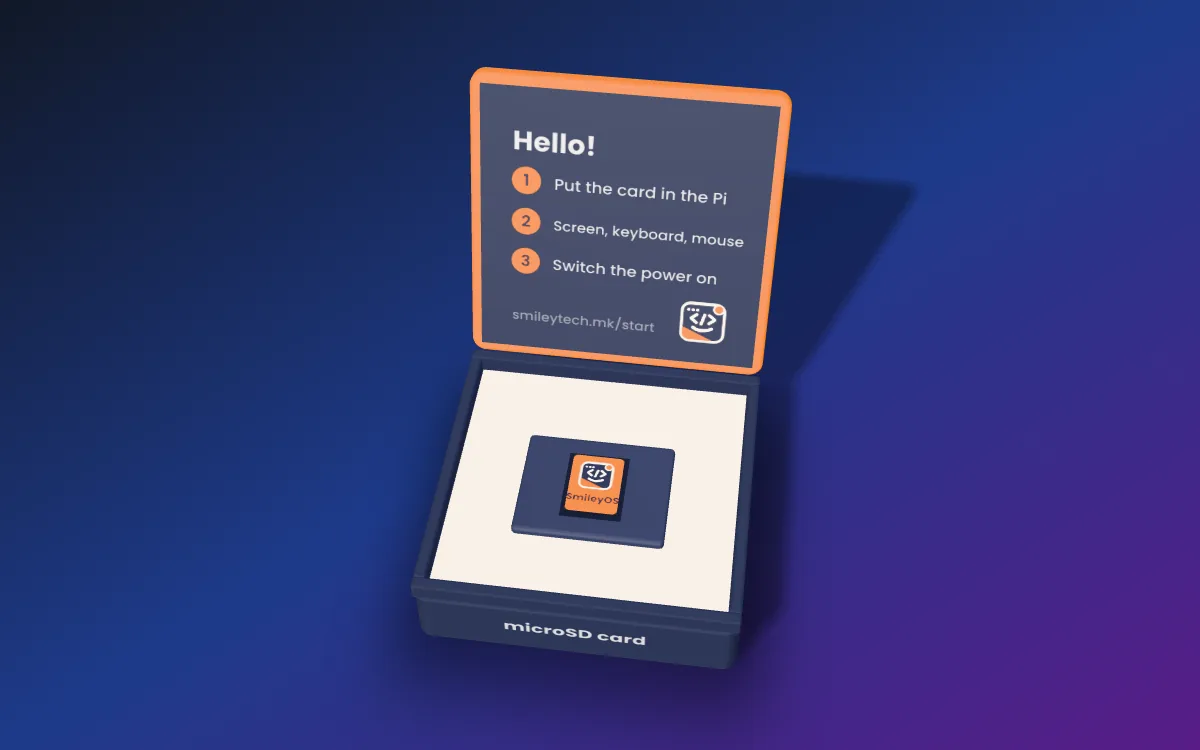 microSD cardSmileyOS for Raspberry Pi
In the making
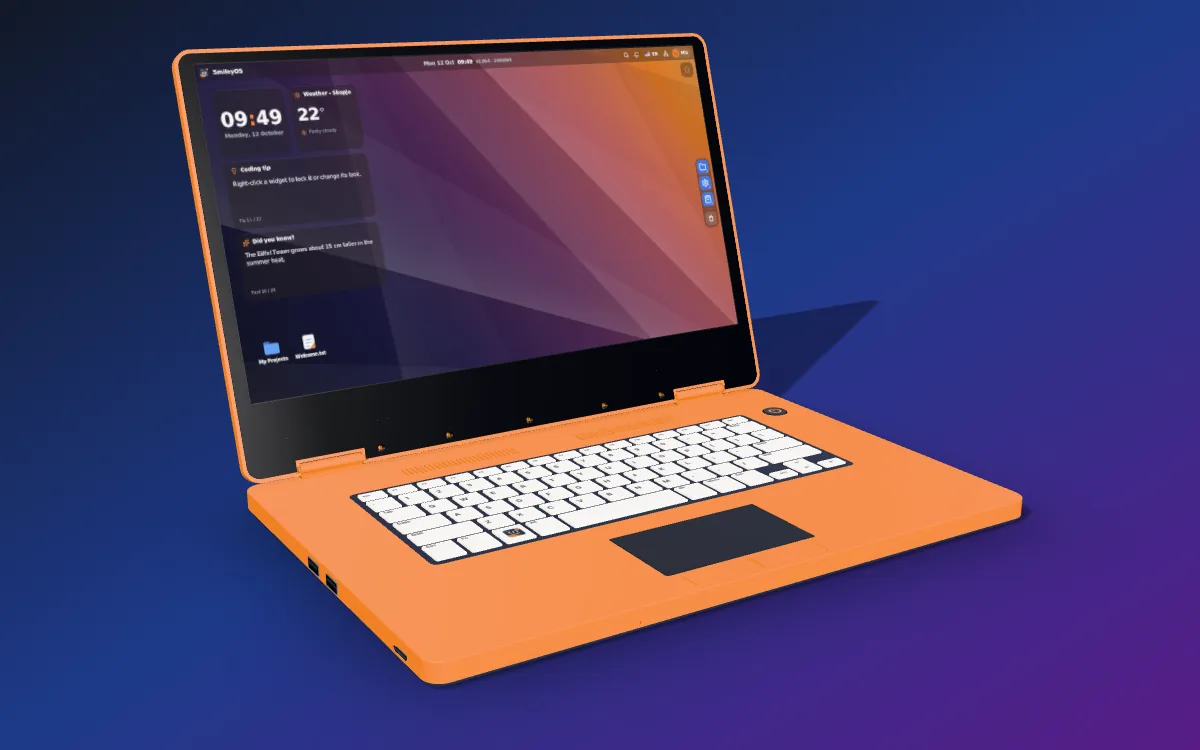 LaptopSBOOK Go
In the making
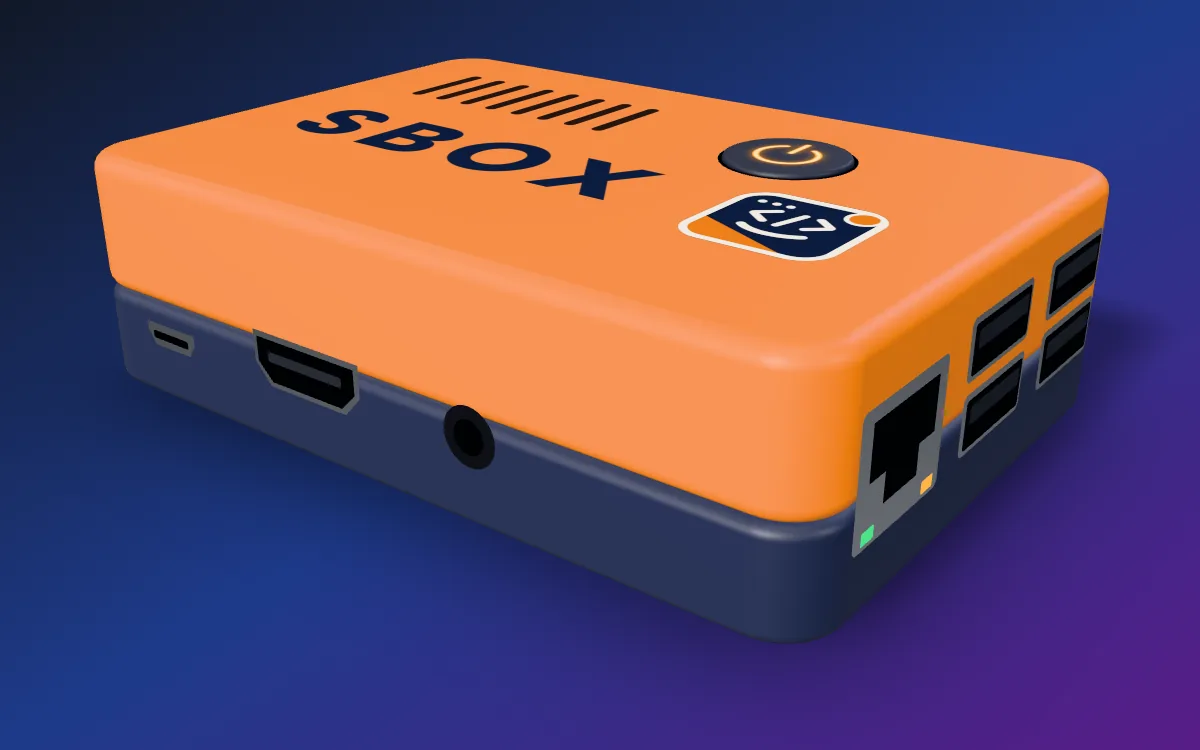 Computer for the TVSBOX
In the making
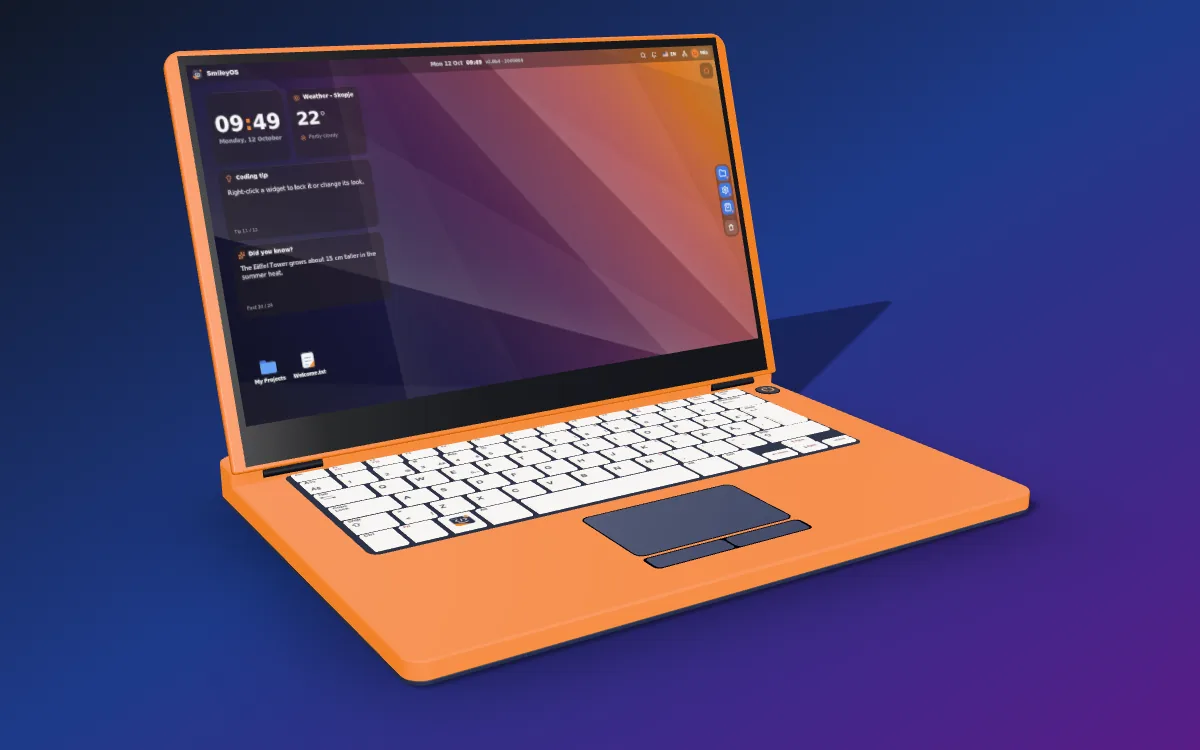 LaptopSBOOK
Planned next
Help build them. Every coffee pays for parts, 3D printing and the first test units of SBOOK Go and SBOX. The goal: a brand new laptop for about €200 that does what a €2,000 one does, and an operating system that brings 20-year-old computers back to life instead of sending them to the scrapheap.
Maybe I aim too high when I put SmileyOS next to Apple, Microsoft and Linux. But the numbers and the facts stand their ground. Behind Windows and macOS stand some of the biggest companies in the world. Behind SmileyOS stands one dreamer. And when you dream, only the sky is the limit.
Nikola GjorgievFounder of SmileyTech, Skopje
He has built software since 2014 and wrote SmileyOS from the first line: the system, the language, the apps and the games. Every picture on this site is a real screenshot, and the whole build is on video, from version 0.1 to today.
Early access
Join the waiting list for the first version. People on the list are the first to get SmileyOS on a USB stick, and the first to hear about SBOOK Go and our other computers. Early users may get it for free or for a small price, depending on how many people ask.
18people are on the list
We are looking for investors, schools and partners for Phase 1. Write to us and we will send the plan.
Get in touch